AI Automation: Cutting Operational Costs by 2026 for Businesses
Updated September 19, 2026 · 6 min read
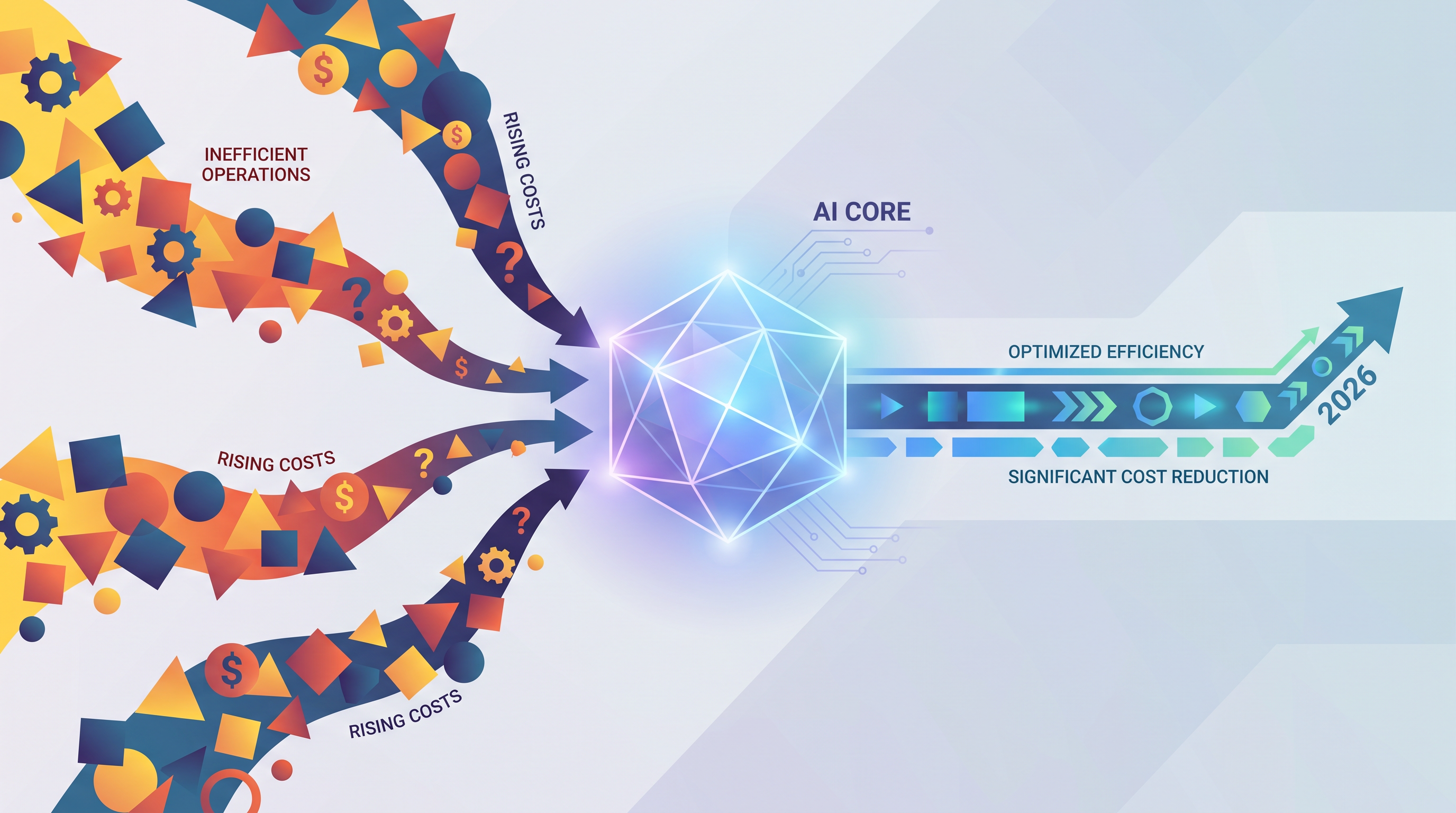
The Dawn of a New Efficiency: Why AI Automation is Your 2026 Cost-Cutting Strategy
In the rapidly evolving landscape of business, staying competitive means constantly seeking out efficiencies. As we approach 2026, Artificial Intelligence (AI) automation isn't just a buzzword; it's becoming the cornerstone of lean, agile, and cost-effective operations. For businesses across the US and Sri Lanka, embracing AI isn't merely about technological advancement, but about strategically trimming operational fat and reallocating resources for growth.
At Elsy Solutions, we've seen firsthand how intelligent automation, often powered by custom software development, can transform bottom lines. The promise of AI isn't to replace human ingenuity, but to augment it, freeing up your most valuable asset — your people — to focus on innovation, strategy, and complex problem-solving. Let's delve into how AI automation will be the definitive cost-reduction tool by 2026.
Understanding AI's Cost-Cutting Mechanics
AI slashes operational costs through several core mechanisms:
- Process Automation: Eliminating manual, repetitive tasks reduces labor costs and human error.
- Predictive Analytics: Forecasting demand, equipment failure, or market shifts minimizes waste and unplanned downtime.
- Optimization: AI algorithms can find the most efficient routes, resource allocations, or production schedules.
- Enhanced Decision-Making: Data-driven insights lead to better strategic choices, preventing costly mistakes.
- Scalability: Automated systems can handle increased workloads without a proportional increase in human resources.
Key Areas Where AI Will Drive Cost Savings by 2026
1. Streamlining Customer Service and Support
The cost of managing customer inquiries and support tickets can be substantial. By 2026, AI-powered chatbots and virtual assistants will handle an even greater percentage of routine customer interactions, from answering FAQs to processing simple transactions.
- Example: A Florida-based e-commerce company uses an AI chatbot to resolve 70% of customer queries instantly, reducing the need for a large, 24/7 human support team and cutting associated labor costs by 30%. Complex issues are seamlessly escalated to human agents, who then have more time to focus on high-value interactions.
- Actionable Takeaway: Identify repetitive customer touchpoints. Invest in intelligent conversational AI platforms that can integrate with your existing CRM.
2. Revolutionizing Back-Office Operations
Administrative tasks — data entry, invoice processing, HR onboarding, compliance checks — are notorious for being time-consuming and error-prone. Robotic Process Automation (RPA), often enhanced with AI, is already a game-changer here.
- Example: A Sri Lankan financial services firm automates the processing of loan applications using AI, reducing manual data entry by 85% and cutting processing time from days to hours. This not only saves on staffing costs but also speeds up revenue generation.
- Actionable Takeaway: Audit your internal processes to pinpoint high-volume, rules-based tasks. Consider RPA solutions, potentially developed as custom software, to automate these bottlenecks.
3. Optimizing Supply Chain and Logistics
Supply chain inefficiencies lead to significant waste, from excess inventory to suboptimal delivery routes. AI's predictive capabilities are invaluable here.
- Example: A national distribution company uses AI to predict demand fluctuations with greater accuracy, optimizing inventory levels and reducing warehousing costs by 20%. AI also dynamically reroutes delivery trucks in real-time to avoid traffic and optimize fuel consumption, saving 15% on logistics.
- Actionable Takeaway: Explore AI tools for demand forecasting, inventory management, and route optimization. Ensure data quality for accurate predictions.
4. Enhancing IT Operations and Cybersecurity
Managing IT infrastructure and fending off cyber threats is a costly endeavor. AI can automate routine IT tasks, predict system failures, and bolster security protocols.
- Example: An enterprise with a large server farm uses AI for predictive maintenance, identifying potential hardware failures before they occur. This reduces unplanned downtime by 40% and extends equipment lifespan, saving on repair and replacement costs. AI-driven threat detection also minimizes the impact of security breaches, which can be astronomically expensive.
- Actionable Takeaway: Implement AI-powered monitoring systems for infrastructure health. Invest in AI-enhanced cybersecurity solutions that learn and adapt to new threats.
5. Elevating Marketing and Sales Efficiency
Wasted marketing spend and inefficient sales processes directly impact operational costs. AI can refine targeting and personalize outreach.
- Example: A B2B software company in Florida leverages AI to analyze customer data, identifying high-potential leads with greater accuracy. This allows their sales team to focus on qualified prospects, increasing conversion rates by 25% and reducing the cost per acquisition. AI also personalizes marketing campaigns, ensuring messages resonate more effectively.
- Actionable Takeaway: Utilize AI for lead scoring, customer segmentation, and content personalization. Integrate AI into your CRM and marketing automation platforms.
Beyond Cost Savings: The Broader Impact
While cost reduction is a primary driver, AI automation brings additional benefits that indirectly contribute to a healthier bottom line:
- Improved Accuracy: Reduced human error means fewer costly rework cycles.
- Increased Speed: Faster processing leads to quicker time-to-market and enhanced customer satisfaction.
- Employee Satisfaction: Freeing employees from mundane tasks boosts morale and allows them to engage in more fulfilling, strategic work, reducing turnover costs.
- Competitive Advantage: Businesses that embrace AI will naturally outpace those clinging to outdated, manual processes.
Actionable Takeaways for Developers and Business Leaders
To successfully harness AI for cost reduction by 2026, consider these steps:
- Start Small, Think Big: Identify one or two high-impact, low-complexity processes for an initial AI automation pilot. Demonstrate ROI quickly.
- Data is Your Foundation: AI thrives on data. Invest in data hygiene, integration, and analytics capabilities. Poor data leads to poor AI outcomes.
- Partner Wisely: Whether it's off-the-shelf solutions or bespoke AI applications, choose partners with proven expertise. Companies like Elsy Solutions specialize in custom software development that integrates AI seamlessly into your unique operational fabric, ensuring solutions are tailored to your specific needs.
- Foster a Culture of Adoption: Prepare your workforce for AI. Provide training, communicate the benefits, and emphasize how AI will augment, not replace, human roles.
- Measure Everything: Continuously track key performance indicators (KPIs) related to cost savings, efficiency gains, and error reduction to prove and refine your AI strategy.
The imperative to reduce operational costs is constant, but the tools available are evolving dramatically. By 2026, AI automation will no longer be a luxury but a fundamental necessity for businesses aiming for efficiency, resilience, and sustainable growth. The time to strategize and implement your AI roadmap is now.
Frequently Asked Questions
How does AI automation specifically reduce operational costs?
AI automation streamlines repetitive tasks, minimizes human error, and optimizes resource allocation across various departments. This leads to significant savings in labor, materials, and overheads, improving overall financial efficiency.
What industries will benefit most from AI cost reduction by 2026?
Industries like manufacturing, logistics, customer service, and finance are poised to see substantial cost reductions through AI automation by 2026, due to their high volume of repeatable processes.
How can businesses start implementing AI for cost savings?
Businesses can begin by identifying high-cost, repetitive processes suitable for automation, then partnering with experts like Elsy Solutions to develop and integrate tailored AI solutions.